

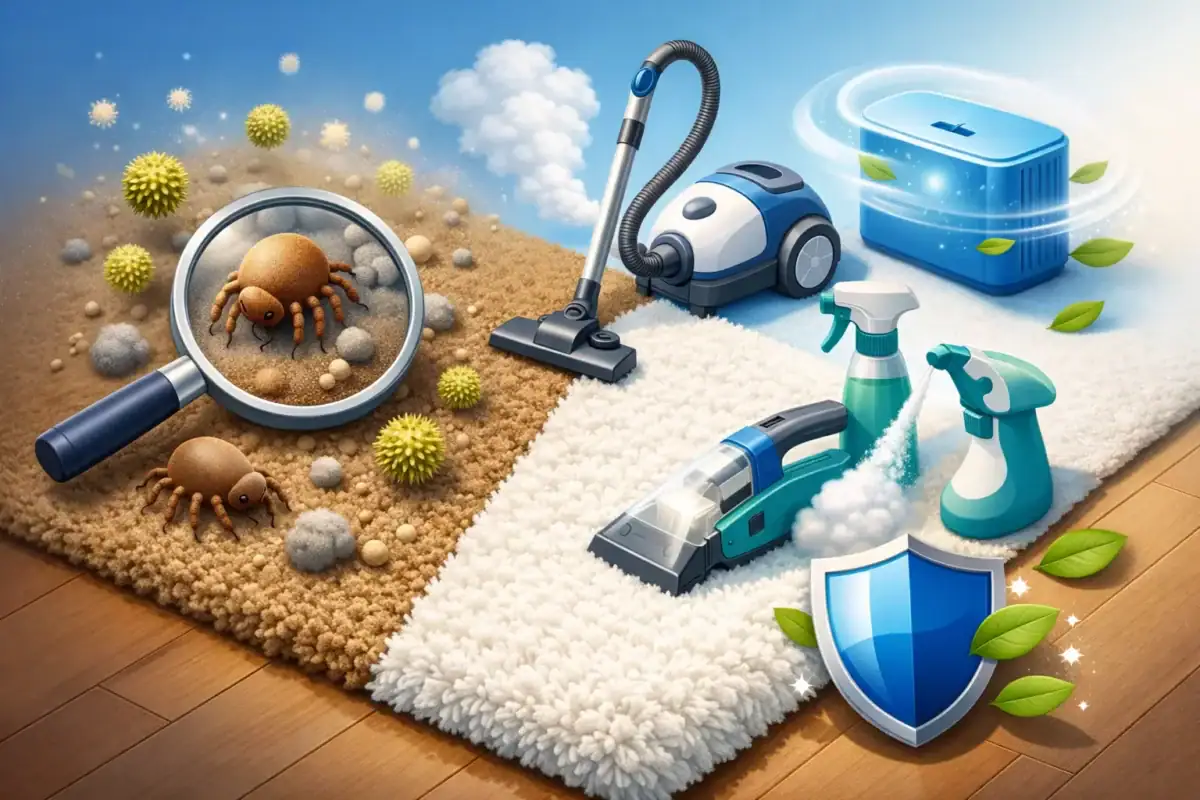
Carpet can make a home feel warmer, quieter, and more comfortable, but it also acts like a filter. It catches dust, pet dander, pollen, soil, and other particles that can irritate allergy sufferers each time the carpet is walked on. The best carpet cleaning methods for allergies do more than make fibers look fresh. They remove the fine debris trapped below the surface without leaving behind residue or excess moisture.
For Albuquerque households, that matters year-round. Dry, windy conditions can bring outdoor dust and pollen inside, while pets, everyday foot traffic, and occasional monsoon humidity create their own carpet-cleaning challenges. The right method depends on the carpet type, the source of the allergens, and how quickly the carpet can dry.
Why carpet can aggravate allergies
Carpet does not cause allergies by itself. The problem is what settles into it: dust-mite particles, pet dander, pollen, mold spores, and fine outdoor soil. A quick pass with a lightweight vacuum may collect visible crumbs while leaving much of that material deep in the pile and around carpet backing.
When someone walks across the room, sits on the floor, or moves furniture, those particles can become airborne again. This can be especially frustrating for families with asthma or seasonal allergies, as well as renters preparing a home for a new occupant.
The goal is not to sterilize a carpet. That is neither realistic nor necessary. The goal is to reduce the allergen load, keep the carpet dry, and prevent cleaning products from leaving a sticky film that attracts more soil.
The best carpet cleaning methods for allergies
HEPA vacuuming is the essential first step
A quality vacuum with a sealed system and a true HEPA filter is one of the most useful tools for allergy-conscious carpet care. The seal matters because it helps keep fine particles inside the machine instead of blowing them back into the room through the exhaust.
Vacuum slowly, making several passes in high-traffic areas and along baseboards where dust gathers. Bedrooms, living rooms, pet areas, entryways, and upholstered furniture deserve extra attention. For households with pets or active allergy symptoms, vacuuming two or three times a week is often more effective than waiting for carpet to look dirty.
A HEPA vacuum is maintenance, not a full reset. It cannot remove oily residues, deeply embedded soil, or material locked into the carpet backing. Still, professional cleaning works better when the carpet has been thoroughly vacuumed first.
Hot water extraction offers the deepest periodic clean
For most wall-to-wall residential carpet, professional hot water extraction is usually the strongest choice for removing embedded dirt and allergy-related particles. It is often called steam cleaning, although the process typically uses heated water and cleaning solution, followed by powerful extraction rather than dry steam alone.
A trained technician applies a measured cleaning solution, agitates the fibers as needed, and extracts the suspended soil with moisture. Done properly, this method reaches deeper than routine vacuuming and removes a significant amount of material that contributes to a dusty, stale-feeling carpet.
The trade-off is drying time. Carpet that stays damp too long can create an odor problem and may encourage mold growth, particularly if the home has poor airflow or existing moisture issues. Good extraction, proper ventilation, ceiling fans, and air conditioning can help carpet dry faster. Avoid walking on freshly cleaned carpet until it is dry, and do not put furniture back too soon unless protective tabs are used.
Hot water extraction is particularly helpful after a move, following a heavy pollen season, after pet accidents have been addressed, or when carpet has not been professionally cleaned in a year or more.
Low-moisture cleaning can be a smart option for fast drying
Low-moisture methods use less water than hot water extraction and can leave carpet ready for normal use sooner. Depending on the system, a technician may use encapsulation products, absorbent pads, or specialized machines that lift soil with limited moisture.
This approach can work well for lightly to moderately soiled carpet, office-like traffic patterns, and households that cannot leave a room unused for long. It is also a practical choice when drying conditions are poor.
However, low-moisture cleaning is not always the best answer for heavily soiled carpet, strong pet odors, or contamination that has reached deep into the backing or pad. In those cases, a deeper extraction method may be more appropriate. A reliable cleaning professional should explain which approach fits the condition of your carpet instead of treating every job the same.
Dry compound cleaning is useful for certain situations
Dry compound cleaning uses absorbent material that is worked into the carpet and then vacuumed out. The compound is designed to attract soil, making it useful when very fast drying is the priority.
This can be a good option for delicate carpet, commercial-style carpet, or rooms that must be used immediately. For allergy concerns, it may reduce surface and loose debris effectively when paired with strong vacuuming. But it may not provide the same deep rinse and extraction as hot water extraction for a carpet holding years of soil, dander, and tracked-in dust.
Avoid residue-heavy shampooing and DIY over-wetting
Traditional carpet shampooing can make carpet look better at first, but too much product can leave residue behind. That residue can attract new soil quickly, creating a cycle where carpet looks dirty again sooner and holds onto more particles.
Rental machines can also cause problems when too much water is used or when extraction is weak. Over-wetting can soak the backing and pad, while excessive detergent is difficult to remove without professional equipment. If you use a spot cleaner at home, use a small amount of product, blot rather than scrub, and follow the product instructions carefully.
For allergy-sensitive homes, the cleanest-looking carpet is not always the healthiest result. A low-residue process and thorough drying are more important than a strong fragrance or foamy appearance.
Match the method to the allergen problem
Not every allergy trigger calls for the same service. If the concern is general Albuquerque dust and seasonal pollen, frequent HEPA vacuuming plus periodic hot water extraction is a dependable plan. If a pet lives in the home, focus on fur and dander removal, and address any urine contamination separately because odor treatments and standard cleaning are not the same service.
If there has been water damage, visible mold, or a persistent musty odor, carpet cleaning alone may not solve the issue. The moisture source must be identified and corrected first. Cleaning over an active water problem can make matters worse.
For landlords and property managers, a move-out cleaning is a good time to inspect carpet carefully. Deep cleaning can refresh a unit between tenants, but worn carpet, damaged padding, or long-term pet contamination may require repair or replacement to create a truly healthy, ready-to-rent space.
A practical allergy-friendly carpet routine
Professional cleaning works best as part of regular home care. Vacuum with a HEPA-filtered machine at least weekly, and more often in rooms with pets, children, or heavy traffic. Change or clean HVAC filters on schedule, use doormats to reduce tracked-in soil, and remove shoes indoors when practical.
Wash pet bedding and area rugs regularly, since allergens move easily between surfaces. Keep humidity under control, especially after carpet cleaning or during rainy weather. If you have severe allergies, consider having someone else vacuum and leave the room for a short time while settled dust clears.
Most homes benefit from professional carpet cleaning every 12 to 18 months. Homes with pets, young children, frequent guests, or active allergy sufferers may need it more often. The right schedule should reflect what happens in the home, not a one-size-fits-all calendar.
What to ask before booking carpet cleaning
Before hiring a carpet cleaner, ask how they handle pre-vacuuming, what cleaning products they use, whether they can minimize residue, and what drying time to expect. It is also fair to ask whether they are licensed and bonded, how they treat pet concerns, and whether they will inspect stains or problem areas before starting.
Celestials Cleaning brings 20 years of local experience to carpet and home cleaning work across Albuquerque and Bernalillo County. A clear quote, honest expectations, and a method matched to your carpet condition go a long way toward a cleaner home and greater peace of mind.
If allergies are making your home less comfortable, start with the room where you spend the most time. A careful vacuuming routine and a properly planned deep cleaning can make that space feel noticeably fresher without creating a bigger mess to manage.