

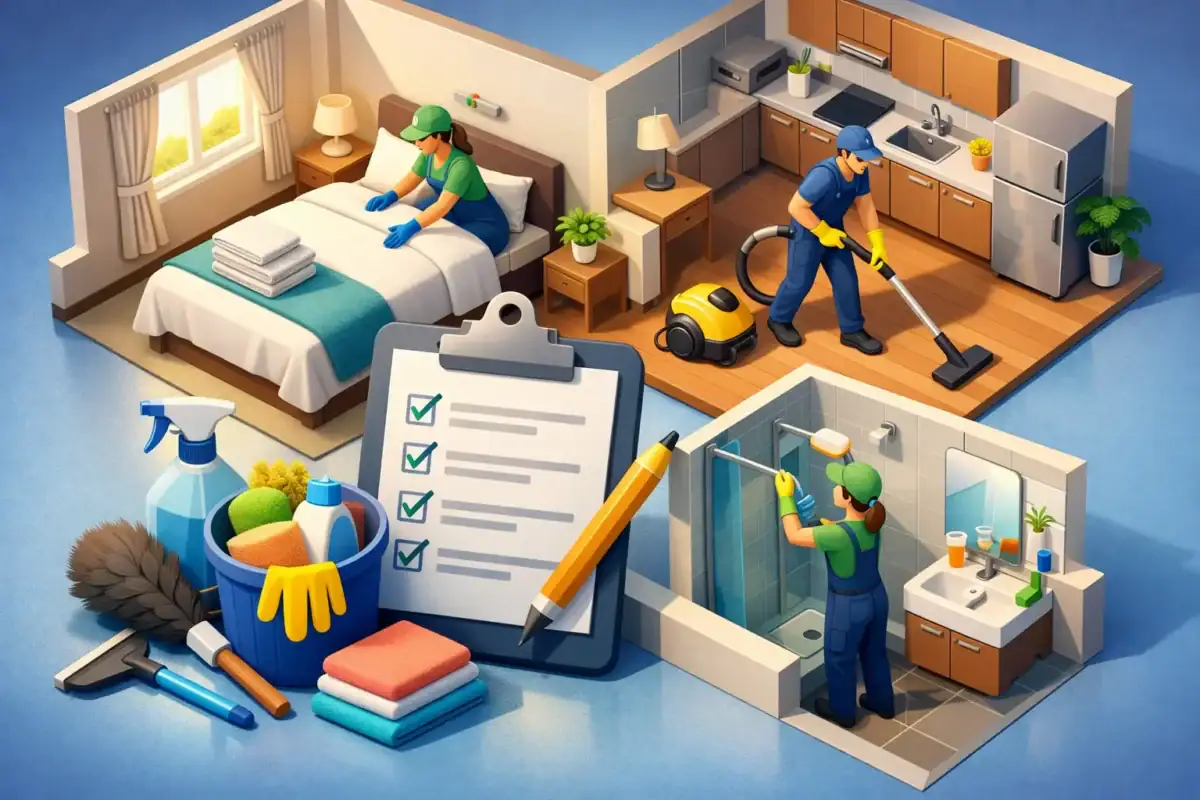
Every lost day between tenants costs money. That is why a solid rental turnover cleaning checklist matters – not as busywork, but as a faster way to spot damage, finish the right tasks, and get the unit ready for the next move-in without backtracking.
Landlords and property managers in Albuquerque know the pressure. One tenant moves out, the next one is already asking for keys, and the property still needs cleaning, touch-ups, and maybe a few minor repairs. The fastest turnovers usually are not the ones done in a rush. They are the ones done in the right order.
Why a rental turnover cleaning checklist saves time
A vacant unit can look deceptively simple. With furniture gone, the place seems almost done. Then you notice grease above the range, hard water on the shower door, dust in the vents, and marks on the walls that were hidden before. Without a checklist, small misses turn into return trips.
A good rental turnover cleaning checklist does two jobs at once. It helps you clean thoroughly, and it helps you inspect the property while you clean. That second part matters just as much. If a baseboard is broken, a blind is bent, or caulk has failed around a tub, you want to catch it before the next tenant does.
The exact scope depends on the unit. A studio with careful tenants will not need the same work as a single-family rental after a three-year lease. Still, the checklist below gives you a practical standard that works for most turnovers.
Start with the right order before you clean
Before spraying counters or vacuuming carpets, walk the entire property with a notepad or phone. Check every room, closet, appliance, and exterior entry. This first pass tells you whether you are dealing with a straightforward clean, a deep clean, or a clean-plus-repair situation.
If there are maintenance issues, separate them into two groups. First, problems that should be fixed before cleaning, such as plumbing leaks, drywall damage, or electrical issues. Second, cosmetic items that can be handled after the heavy cleaning, like paint touch-ups or replacing switch plates. This order prevents rework.
Take out all abandoned items and trash first. Cleaning around leftover belongings slows the job down and makes it harder to assess floors, shelves, and corners. Once the property is empty, open blinds, turn on all lights, and let the unit tell the truth.
Rental turnover cleaning checklist by area
Entry, living areas, and bedrooms
Start high and work down. Dust ceiling fans, vents, light fixtures, curtain rods, door frames, and upper shelves first. If you skip this order, you will knock dust onto surfaces you already cleaned.
Wipe walls where needed, especially around switches, corners, and hallways. Not every wall needs full washing, and over-scrubbing can damage paint, so this is one of those it-depends tasks. In some units, spot cleaning is enough. In others, repainting is the better use of time.
Clean all windows from the inside, wipe sills and tracks, and remove cobwebs. Dust blinds carefully or replace damaged ones. Wipe doors, knobs, trim, and baseboards. These details matter because new tenants notice them right away.
Closets are easy to overlook. Dust shelves, wipe rods, check corners, and make sure no hangers, boxes, or debris are left behind. Then finish with floors. Hard floors should be vacuumed and mopped. Carpet should be vacuumed slowly and, if there are stains, odor, or visible traffic lanes, professionally cleaned. A quick vacuum can freshen a room, but it will not reset a carpet between tenants.
Kitchen
The kitchen usually decides whether a turnover feels clean or not. Even when the rest of the unit looks decent, grease and food residue will make the whole property feel neglected.
Clean inside and outside of all cabinets and drawers. Crumbs, shelf liner residue, and sticky spots are common. Wipe countertops, backsplash, sink, faucet, and disposal area. Degrease around the stove and the wall behind it.
Appliances need more than a surface wipe. Clean the refrigerator inside and out, including shelves, drawers, seals, and the area underneath if it is accessible. The oven should be cleaned inside, along with racks, knobs, and the broiler drawer. The microwave needs attention inside, outside, and around the vent area. The dishwasher should be checked for trapped debris and wiped around the edges and controls.
Do not forget smaller but noticeable details such as exhaust fans, outlet covers, and the top of upper cabinets. These are the spots that make a kitchen look clean even before someone touches the counters.
Bathrooms
Bathrooms are where shortcuts show up fast. Hard water, soap scum, and hair can make a unit feel unready no matter how nice the rest of the property looks.
Scrub showers, tubs, tile, grout lines, glass, fixtures, and drains. Clean and disinfect toilets completely, including behind the base where dust collects. Wipe vanities, drawers, mirrors, light fixtures, and medicine cabinets. Check under sinks for leaks, stains, or signs of moisture damage while you are there.
If caulk is peeling or discolored beyond cleaning, replacement may make more sense than scrubbing harder. The same goes for badly stained grout. A turnover checklist helps you see when cleaning is enough and when a repair or refresh will protect the property better.
Laundry area and utility spaces
These areas are often skipped because they are not front and center. That is a mistake. Tenants absolutely notice dusty washer hookups, lint buildup, and dirty utility closets.
Wipe the washer and dryer inside and out if they are included with the rental. Clean the lint trap area, sweep behind machines if possible, and dust shelves and water heater closets. Check for signs of leaks, missing vent covers, or heavy dust on vents and ledges.
The details that separate average from move-in ready
A strong rental turnover cleaning checklist includes the small items that affect first impressions. Switch plates, thermostat covers, window tracks, door stops, vent covers, and baseboards do not take the longest, but they are often the reason a unit feels polished.
Odor is another big one. A property can look clean and still fail the sniff test. Pet odor, smoke, mildew, and stale air need to be handled directly. Sometimes that means carpet cleaning. Sometimes it means replacing filters, washing hard surfaces, sealing odor sources, or repainting. Air freshener is not a turnover strategy.
Lighting also changes how clean a unit feels. Replace burned-out bulbs and make sure fixtures are free of dust and dead bugs. Bright, working lights help the next tenant see the property at its best and help you catch issues before showings or move-in day.
When cleaning alone is not enough
Most turnovers include at least a few maintenance items. Nail holes, scuffed walls, loose hardware, missing screens, cracked caulk, and damaged trim are common. This is where many landlords lose time, because cleaning is finished but the property still is not truly ready.
Bundling cleaning with light property-prep work usually makes the process smoother. If you already know the blinds need replacing, the walls need touch-up paint, and a few fixtures need tightening, it is more efficient to handle those tasks as part of one coordinated turnover plan instead of calling different vendors one by one.
For many Albuquerque-area rentals, the smartest approach is simple: clean thoroughly, repair what affects condition or first impression, then do a final walkthrough with fresh eyes. Celestials Cleaning sees this all the time with move-out and property-prep jobs. The properties that rent faster are usually the ones where the details were handled before listing photos or key handoff.
A practical standard for turnover quality
The best checklist is the one you will actually use every time. It should be detailed enough to catch missed work, but not so complicated that your team ignores it. If you manage multiple units, keep the standard consistent and note exceptions by property. That makes it easier to maintain quality and document condition from tenant to tenant.
It also helps to define what clean means before the job starts. For example, does turnover cleaning include inside appliances, inside cabinets, carpet spotting, wall washing, and garage sweeping? Different owners answer that differently. Being clear upfront avoids disputes and surprise costs.
If you are doing the work yourself, give yourself more time than you think you need. Turnovers almost always reveal one or two issues late in the process. If you are hiring help, choose a team that understands rentals, not just regular recurring house cleaning. Turnover work has a different pace, a different standard, and a lot less room for missed details.
A clean rental does more than look good in photos. It sends a message to the next tenant that the property is cared for, professionally managed, and ready for a fresh start. That is a better first day for them, and a smarter investment for you.