

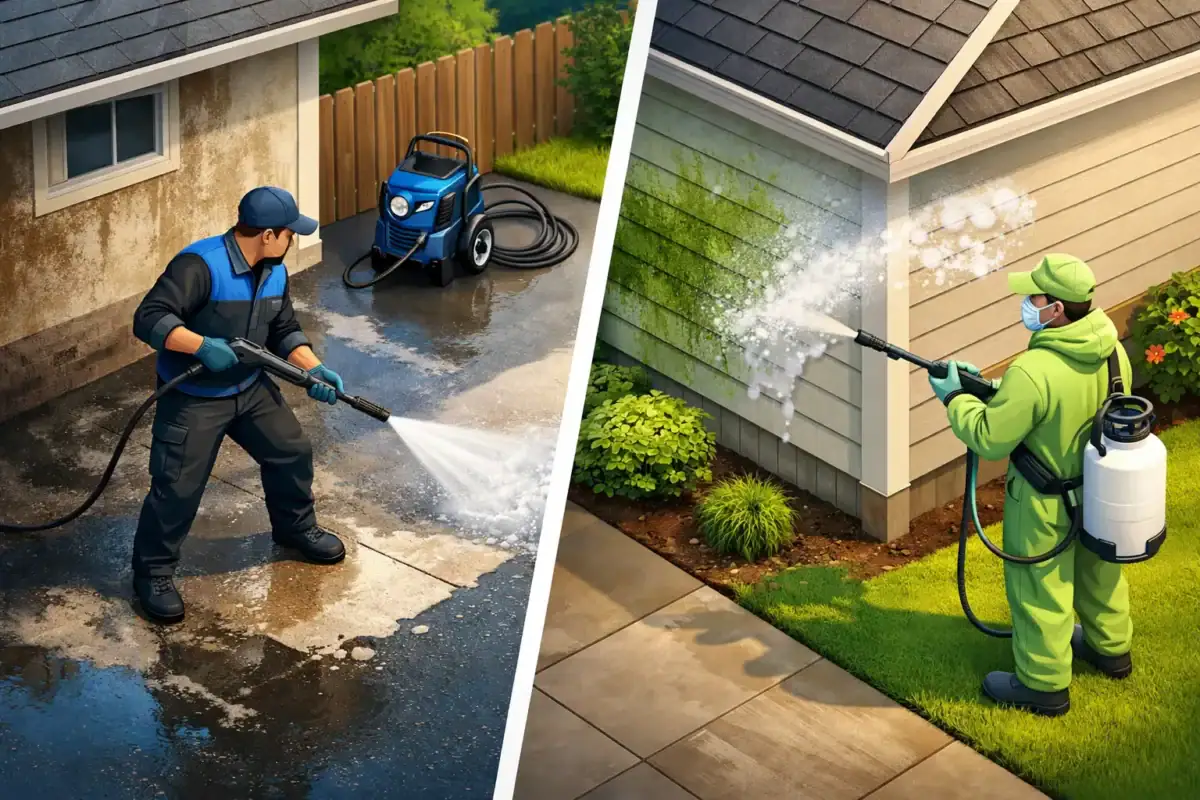
A driveway can handle a lot more force than a stucco wall. That is the heart of pressure washing versus soft washing, and choosing the wrong method can leave you with more than a cleaner surface. It can mean etched concrete, damaged paint, loose siding, or water pushed where it does not belong.
For homeowners, landlords, and real estate pros in Albuquerque, this matters because exterior cleaning is not one-size-fits-all. The right approach depends on the material, the buildup, and the result you want. If you are getting a home ready for photos, cleaning up after a tenant move-out, or just trying to protect the value of your property, it helps to know which method actually fits the job.
Pressure washing versus soft washing: what is the difference?
Pressure washing uses high-pressure water to remove dirt, mud, grime, and surface buildup. It works best where the material is hard, durable, and able to take direct force. Think concrete driveways, some walkways, and certain masonry surfaces.
Soft washing uses much lower water pressure along with cleaning solutions designed to break down algae, mildew, bacteria, and grime. Instead of blasting contamination off a surface, it treats the buildup so it can be rinsed away safely. This is usually the better fit for more delicate areas like painted siding, stucco, fences, roofs, and older exterior surfaces.
The biggest mistake people make is assuming pressure equals better cleaning. Sometimes it does. More often, it just means more risk. Cleaning power does not come only from force. On many surfaces, the chemistry and technique matter more than raw pressure.
When pressure washing is the right choice
Pressure washing makes sense when the surface is strong and the problem is mostly surface-level dirt or debris. Concrete is the obvious example. Driveways, garage floors, sidewalks, patios, and some retaining walls often respond well to pressure washing because they can usually handle the force.
This method is also useful when you need fast visual improvement. If a property has tracked-in mud, buildup from sprinklers, or years of grime on a walkway, pressure washing can restore a cleaner look in a short amount of time.
That said, even on concrete, technique matters. Too much pressure can leave visible lines, strip sealant, or scar weaker areas. Older concrete, cracked surfaces, and decorative finishes need a more careful hand. The job is not just about making it look bright again. It is about cleaning it without shortening the life of the surface.
When soft washing is the safer option
Soft washing is often the better answer for surfaces that are easier to damage or where organic growth is the real problem. If you are dealing with mildew on painted trim, grime on stucco, or staining on siding, lower pressure is usually the safer and smarter route.
It is also the preferred method when the goal is not only to remove visible dirt, but to treat what is causing the staining. Algae, mold, and bacteria can cling to surfaces in ways that plain water pressure does not fully solve. A surface may look cleaner right after pressure washing, but if the root problem is still there, the staining can come back quickly.
Roofs are a good example. Asphalt shingles should generally not be pressure washed because high pressure can dislodge granules and shorten roof life. Soft washing is designed for this kind of cleaning because it removes staining while reducing the chance of damage.
For Albuquerque homes, stucco is one of the biggest reasons soft washing matters. Stucco is common across the area, and while it is durable, it is not a surface you want to attack with unnecessary pressure. A careful wash helps preserve the finish while still removing dirt and discoloration.
Which surfaces need extra caution?
Some materials sit in the gray area where the answer is, it depends. Wood is one of them. A deck or fence may be cleaned with pressure, but only at the right setting and with the right technique. Too much force can fur the wood, leave streaks, or gouge the surface. In many cases, a lower-pressure approach is better.
Painted surfaces also need judgment. If the paint is already failing, high pressure can peel it fast. That may be useful if prep for repainting is the goal, but it is not what you want if you are simply trying to freshen up the exterior.
Windows, screens, outdoor light fixtures, vents, and door seals all need special care too. Water under pressure can force its way into places it should not go. That can lead to moisture problems, damage behind siding, or issues around trim and frames.
This is why experience matters more than the machine itself. A powerful washer in the wrong hands can create expensive repair work.
Pressure washing versus soft washing for curb appeal
If you are preparing a home for sale, rent, or appraisal, exterior cleaning is one of the fastest ways to improve first impressions. But pressure washing versus soft washing is not just a technical choice. It affects how the property presents.
Pressure washing is excellent for hardscapes that frame the home. A clean driveway and walkway make the entire property feel more cared for. Soft washing is often what improves the house itself, especially on stucco, trim, siding, fences, and shaded areas with staining.
For landlords and property managers, the best result often comes from using both methods where they belong. Hard surfaces get the deeper pressure cleaning they can handle. Delicate or painted areas get a safer wash that cleans without creating new problems.
For Realtors, that matters because buyers notice exterior condition immediately. Clean does not have to mean overdone. It has to mean well-maintained.
Why DIY goes wrong
A lot of homeowners rent a machine and assume they are saving money. Sometimes they are. Sometimes they are paying for cleanup now and repairs later.
The problem is not effort. It is knowing the correct pressure, nozzle, angle, distance, and cleaning solution for each surface. Many DIY jobs leave zebra-striping on concrete, blown-out caulking around windows, damaged wood, or chipped paint. Others simply do not last because the buildup was knocked loose visually but not properly treated.
There is also the time factor. Exterior cleaning sounds simple until half a day turns into a full weekend. If you are managing a move, turning over a rental, or trying to get a listing market-ready, having one dependable crew handle cleaning and light property prep can save more than money. It can save the schedule.
That is one reason local property owners often prefer working with a company like Celestials Cleaning. When you already need house cleaning, touch-up work, yard cleanup, or move-out services, it helps to have one trusted team handle multiple jobs with the right equipment and a practical plan.
How to choose the right method for your property
Start with the surface, not the stain. Ask what the material can safely handle before thinking about how dirty it looks. Concrete, stone, and some brick often do well with pressure washing. Stucco, painted surfaces, roofs, and more delicate exterior materials usually call for soft washing.
Then consider what is actually on the surface. Dirt and mud may come off with pressure alone. Mold, algae, and organic staining usually need treatment, which points toward soft washing or a combination approach.
Age and condition matter too. An older home with worn paint, hairline cracks, or repairs from different time periods needs a more cautious cleaning plan than a newer build. The same goes for rental properties and flip projects where surfaces may have hidden weak spots.
If you are not sure, the safest answer is not to guess. A quick professional assessment can help you avoid turning a cleaning project into a repair project.
What Albuquerque property owners should keep in mind
In our area, dust, wind, sun exposure, hard water, and seasonal buildup all affect exteriors differently. Some homes mainly need surface cleaning on patios and driveways. Others have shaded areas where organic growth becomes the bigger issue. And because stucco is so common here, using the wrong method is especially easy to regret.
The right cleaning approach should improve appearance, protect materials, and fit the condition of the property. It should also fit your timeline. If the home is occupied, listed, or between tenants, speed matters. So does reliability.
A good service provider will not force one method on every surface. They will explain what they recommend, where pressure makes sense, where soft washing is safer, and what kind of result you should expect.
The best exterior cleaning jobs do not just make a property look better for a day. They respect the materials, solve the right problem, and help the home hold up well over time.
When you are deciding between pressure and soft washing, think beyond what looks dirty right now. The right choice is the one that gets the surface clean without asking that surface to pay the price later.