

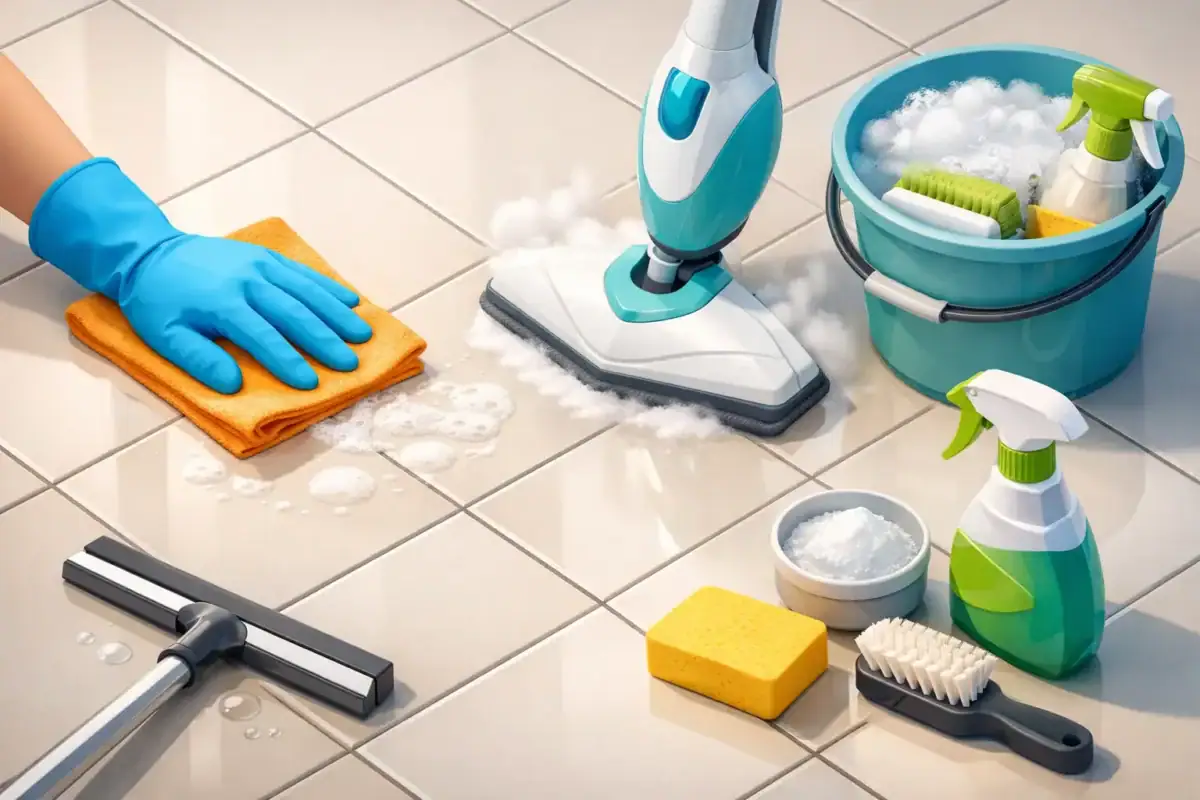
Tile can look clean at a glance while the grout lines tell a different story. In Albuquerque homes, tracked-in dust, kitchen grease, soap residue, and hard-water minerals can slowly dull a tile floor or shower wall. The best ways to clean tile are not about using the strongest product in the cabinet. They are about using the right method for the tile, the mess, and the condition of the grout.
A simple routine prevents buildup, but old stains and deeply soiled grout need a more focused approach. Cleaning the surface correctly also protects the finish, prevents haze, and helps your tile last longer – especially in busy homes, rentals, and properties being prepared for sale.
Start With the Tile Type and the Source of the Dirt
Ceramic and porcelain tile are durable and generally handle mild household cleaners well. Natural stone tile, including travertine, marble, slate, and limestone, is different. Acidic products that may work on ceramic tile can etch or discolor stone. Before applying any cleaner, know what is on the floor or wall and read the product label.
The location matters just as much. A kitchen floor usually needs grease removal and regular dry debris control. A shower needs help with soap scum and mineral deposits. An entryway may have grit that can scratch the finish when it is rubbed around with a mop. Tile in a rental or recently vacated home often has a combination of all three.
When in doubt, test a cleaner in a small, hidden area first. This takes only a few minutes and can save an expensive repair.
The Best Ways to Clean Tile for Everyday Maintenance
For most ceramic and porcelain tile, start by removing loose dust and grit. Sweep with a soft broom, vacuum using a hard-floor setting, or use a dry microfiber mop. Skipping this step is one of the most common cleaning mistakes. Wet mopping over sand, pet hair, and dirt can leave streaks and push grime into grout lines.
Next, mix warm water with a small amount of pH-neutral tile cleaner or a mild dish soap. A little goes a long way. Too much soap leaves a film that attracts more dirt and makes tile look cloudy. Use a microfiber mop or soft mop head rather than a rough scrub pad, and change the water when it becomes gray.
After mopping, go over the floor with clean water if you used soap, then dry it with a clean towel or dry microfiber pad. This final pass is especially helpful on darker tile, where leftover moisture can dry into visible streaks.
For walls and backsplashes, spray the cleaner onto a microfiber cloth instead of soaking the surface. Wipe from the top down so drips do not run across an area you have already cleaned. A soft brush can help around textured tile and along edges where grease tends to collect.
How to Clean Tile Grout Without Making It Worse
Grout is porous, which is why it discolors faster than tile. It also holds onto cleaning residue if the area is not rinsed well. A dirty grout line can make an otherwise clean floor look neglected, but aggressive scrubbing or harsh chemicals can wear down the grout over time.
For routine grout cleaning, apply a pH-neutral grout cleaner or a paste made with baking soda and water. Let it sit briefly, then scrub with a grout brush or a firm nylon brush. Work in small sections, rinse thoroughly, and dry the area with a towel. A toothbrush can work in tight corners, although a dedicated grout brush will make larger areas much easier.
Avoid wire brushes, steel wool, and overly abrasive pads. They can scratch tile glaze, remove grout material, or leave metal particles behind that later rust. Bleach also has limits. It may brighten some light grout temporarily, but repeated use can weaken grout, create strong fumes, and fail to remove the underlying mineral or soil buildup.
If grout remains dark after careful cleaning, the problem may be deep-set soil, failing sealer, staining, or grout that needs repair. At that point, more scrubbing is not always the answer. Professional tile and grout cleaning can remove embedded buildup with the proper equipment while helping you determine whether sealing or repairs are needed.
Use a Different Method for Showers and Hard-Water Buildup
A shower can develop a stubborn combination of body oils, soap scum, mildew, and mineral deposits. Albuquerque’s hard water can make this worse, leaving a white, chalky film on tile, glass, fixtures, and grout. Letting it build up turns a quick wipe-down into a larger cleaning job.
For glazed ceramic or porcelain shower tile, use a nonabrasive bathroom cleaner that is made for soap scum and mineral buildup. Apply it according to the directions, give it time to work, then gently scrub with a non-scratch sponge or nylon brush. Rinse completely. Cleaner left behind in a shower can become residue of its own.
Do not automatically reach for vinegar in a tile shower. Vinegar can be useful on some glazed tile surfaces, but it should never be used on natural stone, and frequent acidic cleaning can be hard on grout and nearby finishes. If you are unsure about the material, a pH-neutral cleaner is the safer choice.
The most effective shower habit is simple: squeegee or towel-dry the walls after use. It reduces mineral spots before they harden and makes weekly cleaning much faster. Keep the bathroom ventilated as well. Moisture that lingers in corners and around caulk creates the conditions for mildew.
Remove Kitchen Grease Before It Reaches the Grout
Kitchen tile floors and backsplashes collect airborne cooking grease. It may not feel oily at first, but it traps dust and creates a dull layer that ordinary water will not remove. For backsplash tile, use a mild degreaser that is safe for the surface, then wipe with a damp microfiber cloth to remove the residue.
On kitchen floors, clean spills promptly and mop regularly with a lightly mixed pH-neutral cleaner. Pay extra attention to the areas near the stove, refrigerator, trash can, and dining table. Those are the spots where grease, crumbs, and foot traffic tend to meet.
If a kitchen floor feels sticky immediately after cleaning, the usual cause is too much product or insufficient rinsing. Mop again with clean water, change the water as needed, and allow the floor to dry fully before walking on it.
Avoid These Common Tile-Cleaning Shortcuts
Some popular shortcuts create more work later. Steam can be helpful on certain sealed tile installations, but high heat and moisture may affect damaged grout, loose tile, old caulk, or some flooring adhesives. Check the manufacturer’s guidance before using a steam cleaner on a tile floor.
Powdered scouring products and rough pads can leave dull spots on glossy tile. Oil-based cleaning products can leave floors slippery. Wax is generally unnecessary on ceramic and porcelain tile and can create a buildup that is difficult to remove. Mixing cleaning products is also a bad idea, particularly when bleach is involved. The fumes can be dangerous, and the combination may damage surfaces.
Natural stone needs its own care plan. Use a stone-safe, pH-neutral cleaner, avoid acidic products, and address spills quickly. Stone may need periodic sealing, but sealing is not a substitute for cleaning. It helps slow absorption; it does not remove dirt already sitting on the surface.
When a Professional Tile Cleaning Makes Sense
Regular care is enough for many homes, but some situations call for deeper service. Consider professional help when grout stays dark after cleaning, tile has a persistent haze, shower walls have heavy mineral buildup, or a move-out, turnover, or listing deadline leaves no time for repeated scrubbing.
Professional equipment can lift soil from porous grout lines more effectively than a household mop and brush. It is also useful when a large area needs consistent results, such as a rental property between tenants or a home being made show-ready for buyers. The goal is not just brighter grout. It is a cleaner surface that looks cared for and is easier to maintain afterward.
For homeowners and property managers in Albuquerque and Bernalillo County, Celestials Cleaning brings 20 years of practical cleaning experience to tile and grout jobs, along with the convenience of coordinating other property-prep needs through one local, family-owned team.
The best long-term approach is steady, sensible care: remove dry debris first, use a cleaner that matches the material, rinse away residue, and deal with buildup before it becomes permanent-looking. A few careful minutes each week can keep tile looking like a finished surface instead of another major weekend project.